
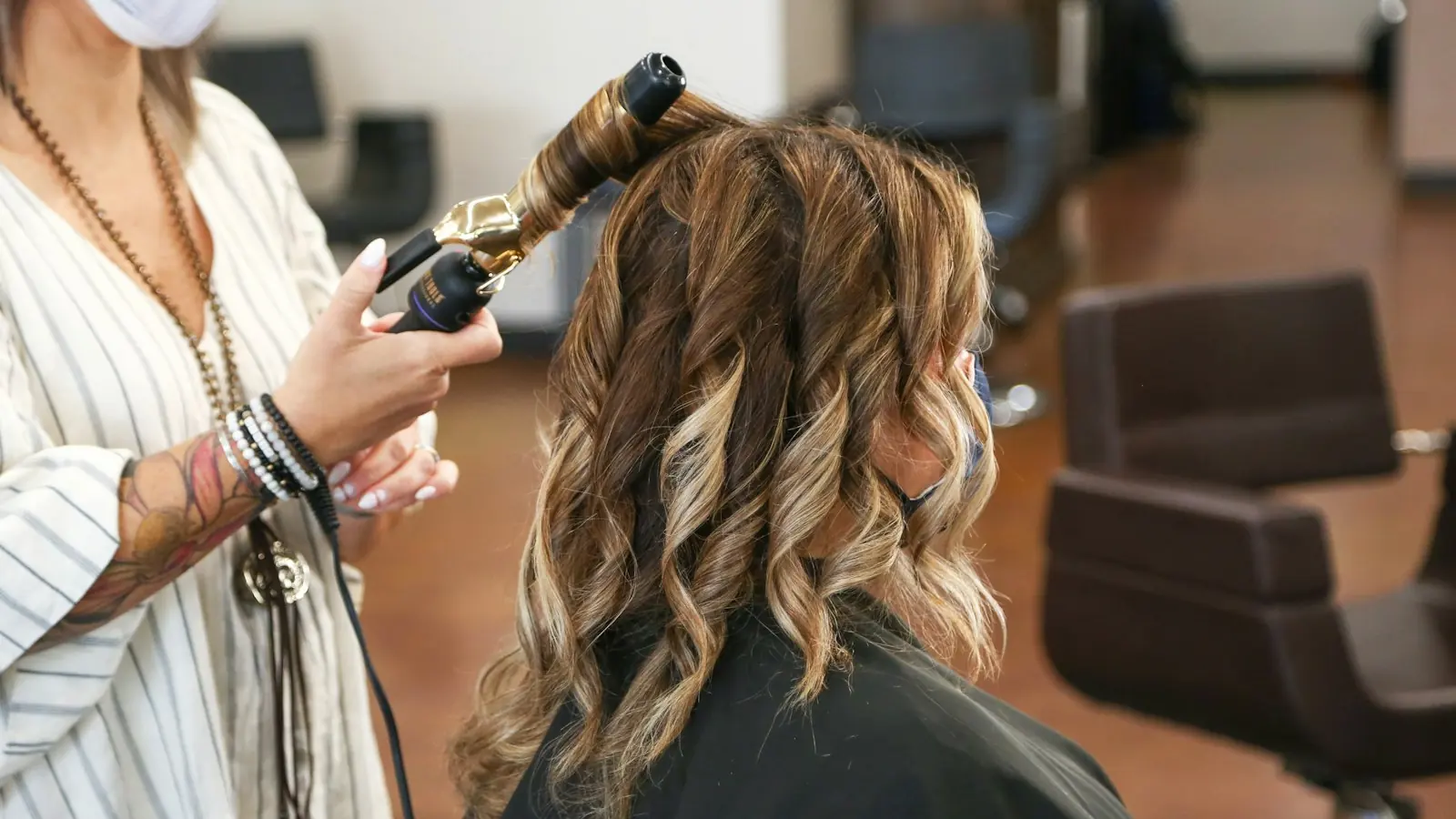
In Wisconsin a cosmetology apprenticeship takes 4,000 hours. In Utah it takes 1,250. We checked all 50 states and DC against their own official sources: 33 have an apprenticeship route to a cosmetology license, 14 require school, and 3 allow it for barbers only.
A salon apprenticeship lets you train for a cosmetology license by working in a licensed salon under a licensed professional, instead of, or alongside, beauty school. Whether it counts toward a license, and how many hours it takes, is set by each state. In the states we checked, an apprenticeship usually takes more hours than school, often about double. The first table lists the 33 states with an apprenticeship route, each linked to the official source we read. The second lists the states where cosmetology still needs school.
And the second half of this guide is for the other side of the chair: salon owners who want to train new stylists. It comes from owners I've interviewed who run associate and apprentice programs.
How an apprenticeship works
The details vary by state, but the shape is pretty much the same almost everywhere:
- You register first. Most states require the apprentice, and often the salon, to register with the board before hours count. Missouri wants the enrollment filed at least two weeks before you start. Georgia gives no credit for hours before the apprentice license is issued.
- A licensed professional supervises you. Many states require extra experience or an instructor license for the supervisor, and cap how many apprentices one person can train.
- You log hours, then take the same licensing exam. The apprenticeship replaces school hours. It doesn't replace the state board exam.
There's also a federal program. The US Department of Labor lists Cosmetologist and Barber as approved Registered Apprenticeship occupations, each with a minimum of 2,000 hours. A registered apprenticeship is a paid job with wages that rise as skills grow, combining on-the-job learning with a mentor and classroom instruction, and federal rules recommend at least 144 hours of related instruction a year. But a federally registered program doesn't grant a license on its own. Your state decides whether it accepts one.
Cosmetology apprenticeship hours by state
Checked against official state board pages, statutes and board rules on October 2 and October 22, 2026. Several states changed their law in 2025 and 2026, so always confirm with your state board before you start counting hours.
| State | Apprenticeship requirement | Key condition | Source |
|---|---|---|---|
| Alabama | 3,000 hours, within 3 years | Apprentice permit from the board before starting, board-licensed shop | Official source |
| Alaska | 2,000 hours in a board-approved program (hairdresser license) | Proficiency test required | Official source |
| Arizona | A US Labor Department or Arizona-approved cosmetology apprenticeship | The statute sets no total hours of its own | Official source |
| California | 3,200 hours on the job plus 220 hours of related training, over 2 years | Trainer licensed in the same field, licensed establishment, age 16+ | Official source |
| Connecticut | Program approved by the state Labor Department (hairdresser and cosmetician) | Official source | |
| Delaware | 3,000 hours, no more than 40 a week | Supervising licensee trains at most 2 apprentices | Official source |
| District of Columbia | 500 classroom theory hours, then 2,000 hours in a salon | Register with the board first, age 18+, at least 20 hours a week | Official source |
| Georgia | 3,000 hours over at least 18 months (master cosmetologist) | Supervisor licensed at least 36 months, no credit before the apprentice license is issued | Official source |
| Hawaii | 3,600 hours | Paid at least Hawaii minimum wage, 20+ hours a week, progress reports every 6 months | Official source |
| Idaho | 3,200 hours | Must cover all areas of cosmetology | Official source |
| Illinois | 3,000 hours of practical training, including 180 hours of related instruction | New law in 2026. Ask the board whether the program is open yet | Official source |
| Indiana | A completed US Labor Department registered apprenticeship | The statute sets no total hours of its own | Official source |
| Iowa | 2,000 hours of supervised practice ("establishment training") | Licensed establishment registers the program, created in 2025 | Official source |
| Maine | 2,500 hours over at least 18 months | Official source | |
| Maryland | 2 years at 20+ hours a week | Sponsored by a Senior Cosmetologist, apprentice permit required | Official source |
| Michigan | 2 years | Licensed establishment offering hair, skin and nail services | Official source |
| Mississippi | 3,000 hours | New law in 2026, set to expire June 30, 2028 unless renewed | Official source |
| Missouri | 3,000 hours | Enrollment filed with the board at least 2 weeks before starting | Official source |
| Montana | 3,000 hours | New rules effective November 2025 | Official source |
| Nebraska | 1,800 hours, the same as school | Must be a licensed apprentice salon | Official source |
| Nevada | 3,200 hours | Apprentice age 18+, hours count only while registered | Official source |
| New Hampshire | 3,000 hours over at least 18 months | Supervisor practicing in NH at least 2 years | Official source |
| North Dakota | 2,500 hours on the job plus 300 hours of related instruction | Registered program, effective January 1, 2026 | Official source |
| Oklahoma | 3,000 hours | Trained only by a licensed instructor, one apprentice per salon | Official source |
| Pennsylvania | 2,000 hours | Supervised by a licensed cosmetology teacher, plus 2 other full-time licensees per apprentice | Official source |
| South Dakota | 1,500 consecutive hours in the same salon | Apprentice salon license, licensed instructor supervising | Official source |
| Tennessee | Up to half of the 1,500 school hours under a supervising licensee | School-based: the apprentice must be enrolled at a licensed school | Official source |
| Utah | 1,250 hours, within 2 years | Licensed instructor, one-on-one, register before starting | Official source |
| Vermont | 1,500 hours | Supervisor licensed in the same field | Official source |
| Virginia | Completed Registered Apprenticeship accepted | Official source | |
| Washington | 3,000 hours on the job plus 244 classroom hours | Approved salon and approved trainers | Official source |
| West Virginia | 3,600 hours, or 2,600 hours plus 1,000 school hours | Apprenticeship provider at a licensed salon, age 16+ | Official source |
| Wisconsin | 4,000 hours (3,712 practical, 288 theory) over 2 to 4 years | State apprentice contract, supervisor with 2,000+ hours licensed practice | Official source |
States where a cosmetology license still needs school
In these states the official text we read gives no apprenticeship route for cosmetology. Some, like Kansas, call school students "apprentices", which is a different thing.
| State | What the law requires | Source |
|---|---|---|
| Arkansas | 1,200 training hours | Official source |
| Colorado | Graduation from an approved school | Official source |
| Florida | 1,200 hours in an approved setting | Official source |
| Kansas | 1,500 school hours | Official source |
| Kentucky | Graduation from a licensed school | Official source |
| Louisiana | 1,500 school hours | Official source |
| Massachusetts | 1,000 hours in an approved course | Official source |
| Minnesota | 1,550 hours | Official source |
| New York | 1,000 hours in an approved course | Official source |
| North Carolina | 1,500 school hours, or 1,200 school hours plus 6 months as an apprentice | Official source |
| Ohio | 1,500 school hours | Official source |
| Oregon | School hours for a hair design license | Official source |
| Texas | 1,000 hours at a licensed school | Official source |
| Wyoming | 1,600 school hours | Official source |
| New Mexico | Cosmetology needs 1,600 school hours. An apprenticeship route exists for barbers only. | Official source |
| Rhode Island | Hairdresser needs a 1,000-hour course. An apprenticeship route exists for barbers only. | Official source |
| South Carolina | Cosmetology needs 1,500 school hours, barbering has an apprentice route. An apprenticeship route exists for barbers only. | Official source |
One state we could not confirm. New Jersey's board pages sit behind a security check, and the rule text we found was on a third-party mirror, not an official site. That copy lists only school routes, but check with the New Jersey board directly.
Two states sit in between. North Carolina accepts 1,200 school hours plus at least six months as an apprentice in place of 1,500 school hours, so school is still required. Tennessee lets up to half of its 1,500 hours be done under a supervising licensee, but only while enrolled at a school. We list North Carolina with the school states and Tennessee with the apprenticeship states, because that is how each state's own rules describe it.
Apprenticeship versus school hours. In the 11 states where we read both numbers, the apprenticeship required between 1.0 and 2.6 times the school hours, with a typical figure of about double. Nebraska is the exception, at 1,800 hours either way.
Barber apprenticeships
Barber apprenticeships follow the same pattern. Here are a few examples from official sources: Missouri requires 2,000 hours under a licensed barber apprentice supervisor (school is 1,000). Idaho requires 1,800 for a barber (school 900). Hawaii requires 3,000. New York requires two years as a registered barber apprentice. Washington requires 2,000 hours on the job plus 144 in the classroom. Check your state board for the current figure.
Is an apprenticeship right for you?
So here's the honest trade-off. You usually work more hours, but you're in a real salon from day one, often paid, learning how the business runs. Becky Dobbs, owner of Elleven Salon, wishes every stylist learned that way:
"I wish I could change the way that you get your license that it has to be half school and half working and having associates."
Becky Dobbs, Elleven Salon
Her reason is what school leaves out, right? In her words, "I think there's a lot that they don't learn in school," starting with how to sell yourself to clients.
Some of the best-known names in hair came up through apprenticeship. Vivienne Mackinder, later an artistic director for Vidal Sassoon, went through Sassoon's training program:
"So it was quite a long apprenticeship program. So over now, like three years into being a hairdresser and still haven't charged anyone for a haircut yet."
Vivienne Mackinder
Scott Buchanan learned the hard way why training after school matters. At his first salon job in New York in 1980, a client asked for a cut he didn't know how to do:
"about an hour and a half later, she was crying and I was crying because I didn't know how to do it."
Scott Buchanan
He then spent four years as an apprentice to one stylist. "I was his apprentice and I helped him only and that's where I got my training," he says. He went on to own five salons.
How to find a salon apprenticeship
- Read your state board's rules first, so you know the hours, who can supervise you, and what you need to file before you start.
- Look for salons that already train people. Ask whether they run an associate or apprentice program, how long it is, and who will teach you.
- Pick the place before the paycheck. Greg Chavez, who has trained stylists since 1986, says the first salon matters more than anything: "Because that either lifts you or kind of takes you down."
- Find a mentor and keep investing. Vivienne's advice is blunt: "Seek out great mentors." She also tells new stylists to set aside part of their tips for education.
- Be the student who shows up. Travis Parker, founder of the Travis Parker Academy, never paid a mentor. He learned by shadowing people he admired: "The easiest person to teach is a student that wants to learn."
For salon owners: how to run an apprentice or associate program
Every owner in our interviews trains new stylists in some form. And here's what their programs have in common.
Keep it hands-on and time-boxed
Greg Chavez runs the associate program at Salon Kreed in Colorado Springs:
"So we do a four to six month associate program, and they work with different educators, and we go through a lot of trends, specializing color-cut, hair extensions."
Greg Chavez, Salon Kreed
He has more applicants than spots, and he sees stylists who came through school during COVID arriving with too little hands-on time. His view of video-based learning is short: "I think that's the best education is hands-on."
Rotate them, then ramp them onto the floor
Becky Dobbs moves her associates between senior stylists so they see different ways of working. When training ends, they don't jump to a full book. They build one day, then two, then three, with goals at each step. I love that. Lensi White trains the same way in her studio, side by side. Recently she and her trainee cut one men's haircut together, each taking a side.
Know the difference between an associate and an assistant
Becky is really clear on this. An assistant is paid hourly to help and isn't being trained for the floor. An associate is in a program with a path to their own clientele: "it's not an assistant, it is an associate." At Elleven, senior stylists at the top levels take on an associate as part of moving up.
Recruit from the schools
Becky's advice for filling a program is to go to the beauty schools and pitch it like further education:
"you can set up a time to go talk to the students that you have a program almost like creating a master's program"
Becky Dobbs, Elleven Salon
Check your state's apprentice rules
Just know that an in-salon associate program for licensed stylists is different from a state-registered apprenticeship that counts toward a license. So if you want your program to count, your salon and your trainers will usually have to meet the state's requirements in the table above, such as instructor licenses, salon licenses and limits on how many apprentices one person supervises.
For the culture side of keeping the people you train, read salon culture: what six owners do to keep a team and why good stylists quit.